
Core Concepts
All research and editorial content is developed and curated by Mosaica. Read about our process.
- Mesopotamia
- Cooperation
- Honour
- Empathy
- Generosity
- Pilgrimage
- Perseverance
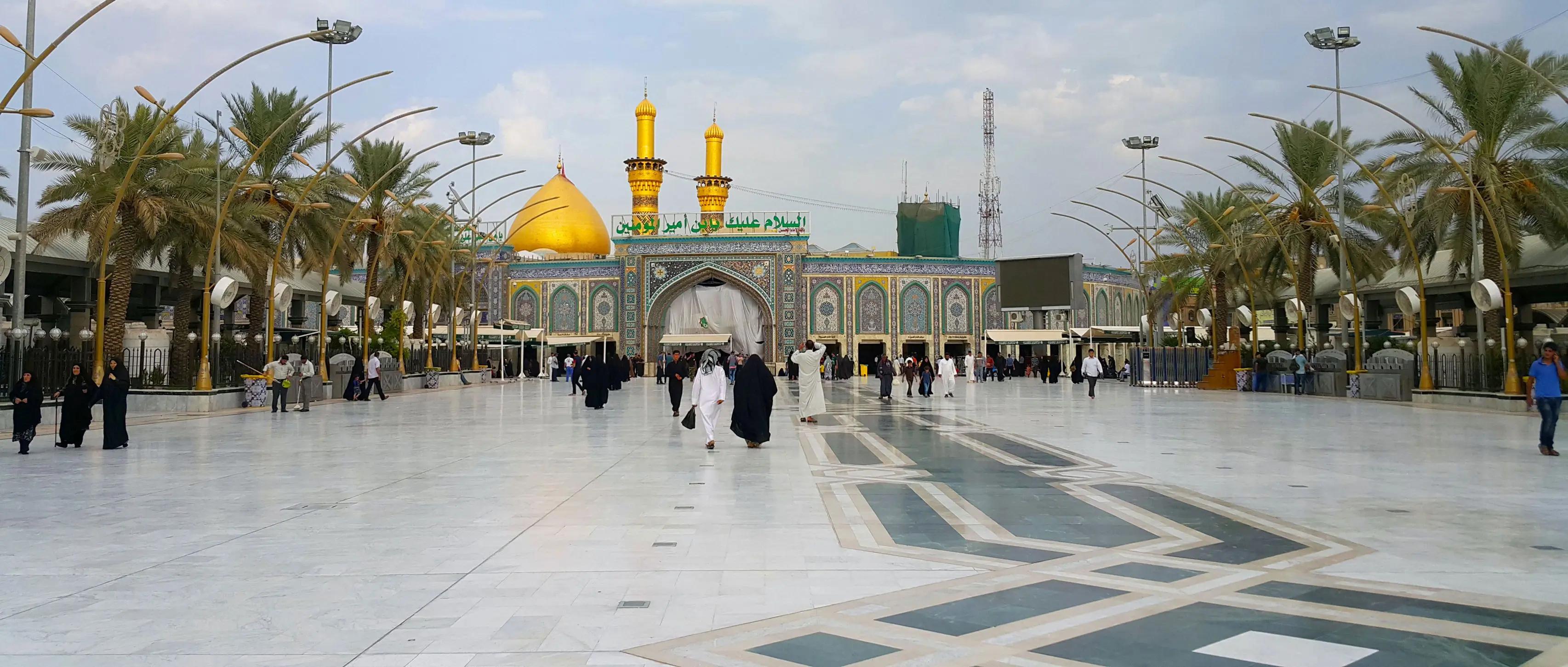
Iraq is a Middle Eastern country bordering Turkey, Iran, Kuwait, Saudi Arabia, Jordan and Syria. The land is situated within the historical region of ancient Mesopotamia and is considered the birthplace of advanced civilisation. The modern capital, Baghdad, was the cultural and economic epicentre of the Islamic world for centuries. Iraq’s historical legacy has been somewhat overshadowed by the international and civil conflicts that have overwhelmed the nation in the 21st century (see Political History). Decades of conflict and invasion have significantly impacted people’s daily lives and changed the demographic and cultural landscape of the country (see Demographic Changes). However, many Iraqis view the hardship and political turmoil as a recent devastating chapter in a much longer, richer, and more prestigious history. Perseverance has become an essential trait of the Iraqi character instilled through these experiences over multiple generations.
The majority of Iraqis are Muslim and speak Arabic as either their first or second language. Iraqi Arabs are the largest ethnic group, and this dominant culture strongly influences social norms. As a result, the mainstream culture of Iraq closely resembles Arab traditions and Islamic principles. However, there is also significant ethnic, linguistic and cultural diversity among the population (see Cultural Diversity and Relationships). Many local identities have been preserved, resulting in observable social and cultural differences between regions, tribes, and ethnic groups (see Ethnic Groups and Identities).
Tight family bonds and strong community networks community are enduring features of Iraqi life and culture, forming the bedrock of society. Most Iraqis have a deeply ingrained sense of collective responsibility and duty to family and community. This solidarity ensures mutual support, providing crucial support in difficult circumstances. Iraqis also share a strong moral code and social values that guide behaviour and interactions (see Honour). Virtues such as hospitality, loyalty and respect for elders serve as unifying principles across the diverse population, shaping expectations for how one should act (see Social Values). The awareness of community opinion and honour tends to lead people to exercise restraint in their social conduct, adhering to traditional norms. Consequently, conservative behaviour is the general cultural norm.
Mesopotamian Identity and Historical Legacy
Iraq is primarily situated within the historical region of Mesopotamia, a stretch of land between the Tigris and Euphrates rivers – literally named “between two rivers” (Bayn an-Nahrain in Syriac). This river system provided fertile conditions for early human settlement, and the region became home to the earliest known civilisations in human history. The emerging ancient Mesopotamian civilisations had a lasting impact on the global evolution and export of technology, agriculture, language, literature, trade, religion and law. The Sumerian, Akkadian, Assyrian and Babylonian empires became renowned for early developments in arts, science and language. Of these, the city of Babylon remains the most famous, having been a Mesopotamian centre and the largest city in the world for nearly two millennia (2000 BCE to 540 BCE).
Much of modern Iraq’s development and culture has been informed by the blueprint of these Mesopotamian civilisations. For example, most cities and urban centres in Iraq continue to reside around the Tigris and Euphrates rivers, and some pre-Islamic Mesopotamian religious traditions survive in the ritual practices of the Yazidi minority. Due to the influence of this era, the Iraqi Arabic language remains distinctive from other nearby Arabic and Farsi dialects.
The legacy of ancient Mesopotamia continues to be a great source of pride for the Iraqi people. While the true origins of present-day communities are often contested, Iraqis of multiple ethnicities and religions claim lineage to these pre-Islamic civilisations in different but parallel ways. For example, Chaldeans and Assyrians view themselves as direct descendants of Mesopotamians, reflected in their language and naming traditions. Many Iraqi Kurds claim to be the descendants of the Medes, an ancient Median-speaking people who inhabited northwest Iran and northern Iraq in the first millennium BCE. Some Iraqi Arabs may also trace their family lineage to pre-Islamic tribes of southern Mesopotamia, passed down through ancient astrology and poetry.
Overall, the Mesopotamian identity is one of the most unifying concepts for Iraqis. As a pre-Islamic cultural reference, it offers a pluralistic identity that captures a broader section of Iraqi society. Recently, some Iraqis in the diaspora have preferred to identify as ‘Mesopotamian’ (similar to the Iranian penchant for being referred to as ‘Persian’). This may be partly to avoid negative stereotypes associated with the modern Iraqi state and its turbulent history. Nonetheless, Mesopotamia carries a strong positive connotation – evoking a rich, shared history steeped in some of humanity’s best-known civilisations.
Ethnic Groups and Identities
Ethno-religious affiliations constitute a core component of personal identity for most Iraqis, informing notions of belonging and embedded in their sense of self. Within the Iraqi context, ethnic and religious identities are often inextricably linked, whereby one’s religious denomination is frequently determined by or significantly correlated with one's ethnolinguistic background. Consequently, an individual’s social life, community, political and economic status, and cultural traditions and expression are frequently influenced or entirely informed by the context of their specific ethnic heritage.
Ethno-religious affiliations also serve as social identifiers that provide immediate cultural context and swift interpersonal understanding. For example, an Iraqi’s ethno-religious affiliation can offer a general indicator of their region of birth and linguistic background. However, it is important to acknowledge that a spectrum of tribal affiliations, cultural practices, and religious interpretations can exist within a single ethnic group. Therefore, it is common for Iraqis to identify themselves based on ethnicity, tribe, or specific religious denomination to differentiate themselves from others. For example, an Iraqi Arab from Najaf may refer to themselves as a ‘Shi’a Muslim’ when talking to a Sunni Muslim from Mosul, who otherwise shares the same ethnic and linguistic background (see Religion).
Iraqi Arabs are the largest ethnic group in Iraq, comprising roughly 75-80% of the population. This population primarily identifies as Muslim and speaks Arabic as their first language. However, generalisations of Iraqi culture that correlate it exclusively with the Arab majority run the risk of misrepresenting the significant presence of minority groups and the linguistic and cultural diversity of the country. Approximately 15-20% of the population are Iraqi Kurds, constituting the second-largest ethnic group in Iraq. The remaining 5% of Iraqis belong to ethno-religious minority groups, such as Chaldeans, Assyrians, Yazidis, Turkomen, Shabaks, Armenians and Mandaeans (although actual estimates on minority populations are unreliable). These minority groups are mostly non-Arabic speakers, follow various religious beliefs, and practise diverse customs and traditions. See Ethno-Religious Minorities for more information.
Iraqi Arabs
Iraqi Arabs (also known as Mesopotamian Arabs) live almost everywhere throughout Iraq, primarily residing in cities around the Tigris and Euphrates rivers (e.g. Baghdad, Basra, Al Diwaniyah, etc.). The vast majority are Muslim, following either the Shi’a or Sunni Islamic tradition (see Islam in Iraq). Shi’a Arabs are the more numerous group, populating most of central and south Iraq. Sunni Arabs are mostly situated in the western and northern regions bordering Kurdistan. The two groups often have differing social and political perspectives due to their respective sectarian treatment under Sadaam Hussein’s rule and experiences in the post-Saddam era (see Political History).
For the most part, Iraqi Arabs are ethnically and linguistically homogeneous – speaking the Arabic language and sharing common Arab cultural customs. These traditional Arab values and Islamic principles form the dominant cultural norms in much of Iraq. However, the Arab population encompasses many different cultural backgrounds and lifestyles, and cultural traditions can diverge significantly between tribes and sub-groups (see Tribal Affiliation). Within Iraq, Arabs often self-identify by their religious denomination or tribal affiliation to distinguish themselves in this respect.
Bedouins
Bedouin (badawi) communities tend to be more closely tied to their tribal affiliation than other Iraqi Arabs who live in urban centres. Traditionally, Bedouins were nomads who herded animals through Iraq’s desert, observing astronomical patterns to govern their day and moving when they needed new pasture or water. Most continue to live in extended family or tribal groups. However, technology and climate change have led many to move closer to the Tigris and Euphrates rivers, altering traditional lifestyles towards agriculture. Today, it is normal to see Bedouins driving four-wheel cars and using mobile phones.
Marsh Arabs
Marsh Arabs (or Ahwaris) traditionally reside in the marshlands of southern Iraq (the Mesopotamian and Hawizeh Marshes) and have a distinct culture and lifestyle that differs from the cultural mainstream of Iraq. The population is known for their unique, water-based agricultural practices. Traditionally, Ahwari societies were delineated by occupation into two main groups: those who bred and raised water buffaloes and those who cultivated semi-aquatic plants and other crops.
The majority of Marsh Arabs are Twelver Shiʿa Muslims and primarily speak South Mesopotamian Arabic, a dialect linked to pre-Islamic Iraq. As with most tribes of southern Iraq, Ahwari societies adhere to a traditional code of behaviour and honour with a sheikh as the main authority. However, this is performed and enacted through unique forums. For example, political, social, judicial and religious congregations are convened in a ‘mudhif’, a cylindrical structure constructed from reeds. This tribal guesthouse is used to settle disputes, to carry out diplomacy with other tribes, and as a gathering point for religious and other celebrations. To this day, the sheikh of a Marsh Arab group will collect contributions from his tribe to maintain the mudhif.
Iraqi Kurds
Kurds are an ethnolinguistic group historically inhabiting the geographic region generally referred to as ‘Kurdistan’. This includes areas of eastern Turkey, northern Iraq, western Iran and smaller parts of northern Syria and Armenia. Today, Kurdish populations are mostly concentrated around areas where Iraq, Turkey, and Iran’s state borders adjoin. Within Iraq, the majority of Kurds live in the northern region of Kurdistan, an autonomous zone with its own parliament and governing body.
Iraqi Kurds are the second largest ethnic group in Iraq, with estimates varying between 6-8.4 million people. The majority are Sunni Muslims adhering to the Shafi'i school of law, although there are some smaller populations of Shi’a Muslims (such as the Faili Kurds who live along the Iran/Iraq border and in Baghdad). Most speak Kurdish as their first language and Arabic as a second language. ‘Kurdish’ is a catch-all term for various languages and dialects, each with varying degrees of similarity between them. Sorani, Kurmanji and Gorani are the most widely spoken dialects in Iraq. Sorani and Gorani use an adapted Arabic alphabet, while Kurmanji uses a Latin alphabet.
Kurds make up the largest ethnic group in the Middle East without a sovereign state. Historically, Kurdish communities often identified more strongly with their tribal affiliations than a unified Kurdish identity. However, a Kurdish national consciousness emerged over the 20th century as many felt their political and cultural rights had been ignored by successive regimes. Various attempts to strive for Kurdish independence from the central Iraqi government have been met with strong and often violent repression.
In the late 1980s, Saddam Hussein’s Ba'athist government carried out a genocidal counterinsurgency operation, the Anfal Genocide, that killed between 50,000 and 182,000 Kurds. The Kurdistan region gained de facto independence in 1992 yet continues to struggle for autonomy, holding an independence referendum to separate from Iraq as recently as 2017. As Kurdish nationalism was largely solidified through politics, it is closely associated with the people’s emancipatory struggle and resistance against oppression.
Iran and Turkey carried out rocket and artillery attacks in Sinjar and the KRI in 2022, reportedly targeting members of the KDPI (Kurdish Democratic Party of Iran) and the PKK (Kurdistan Workers’ Party, a Kurdish terrorist organisation active in Turkey and Iraq). Civilians were reportedly killed in and displaced by these attacks.
Faili Kurds
Faili Kurds are an ethnic subgroup historically inhabiting both sides of the Zagros mountain range along the Iran-Iraq border. There are an estimated 500,000 to 1 million Faili Kurds in Iraq. Unlike the majority of Kurds, who are generally Sunni Muslims, Faili Kurds are Shi’a.
Faili Kurds have historically experienced stigmatisation and persecution in Iraq due to their dual Shi’a and Kurdish identities, as well as their perceived association with Iran. They faced mass deportations under the regime of Saddam Hussein, and many were stripped of their citizenship. While the Iraqi Government claims that 97% of expelled Faili Kurds have regained citizenship, community activists claim thousands of families remain stateless.
Turkomen
Turkomen are generally recognised as the third-largest ethnic group in Iraq. They reside almost exclusively in the north, in an arc stretching from Tal Afar in the west through Mosul, Erbil, Altun Kopru, Kirkuk, Tuz Khurmatu, Kifri and Khaniqin. Approximately 60% of Turkmen are Sunni, with the remainder mainly being Shi’ites following the Ithna’ashari (Twelvers) branch of Shi'a.
During the Ba’athist era, the Turkmen suffered mistreatment and denial of cultural, linguistic and political rights. They have long been in conflict with Kurds and Arabs over the status of disputed areas to which they have historical claims, especially in Kirkuk.
Ethno-Religious Minorities
Iraq is traditionally home to various ethno-religious minorities, including Chaldeans, Assyrians, Yazidis, Turkomen, Shabaks, Armenians and Mandaeans. For many of these ethno-religious groups, there is no clear separation between ethnicity and religion (see Religion). They usually view themselves as descendants of a particular group in history, sharing a cultural heritage that defines their religion and ethnicity. These minorities are usually endogamous, meaning they marry within their ethnic group. In this way, one is born into an ethno-religious group (i.e. you cannot become a Yazidi through marriage, for example).
The size of these communities in Iraq is unclear. The cultural identities of minorities were actively combatted and suppressed during Saddam Hussein’s rule. Many ethnic minorities were forced to identify as ‘Arab’ in censuses during the Ba’athist regime (1968-2003) in order to access public services and avoid discrimination. As such, some sources may describe these minorities in a misleading way (e.g. referring to Chaldeans and Assyrians as “Arab Christians”).
The new Iraqi Constitution describes Iraq as a multi-ethnic and multi-religious country and recognises some minorities (such as Assyrians). However, it does not acknowledge the intertwined notion of religion and ethnicity. For example, Yazidis are not recognised as an ethnicity but are described as ethnic Kurds who follow the Yazidi religion. This has led many Yazidis to argue for political representation and acknowledgement as a unique people.
Ethno-religious communities often identify themselves by their religion within Iraq. For example, a Chaldean may describe themselves as ‘Christian’, while Turkomen may refer to themselves as either Sunni or Shi’a Muslim. However, people tend to self-identify by their ethnicity when living overseas. For example, an Iraqi Christian living in Australia may refer to themselves as Chaldean to differentiate themselves from surrounding Christians. Further, some minorities living overseas no longer identify with the Iraqi national identity due to the experiences their community suffered throughout the 21st century.
Iraq’s ethno-religious minorities speak a variety of languages. For example, most non-Arab Iraqis speak a Semitic or Indo-European language specific to their ethnic identity. Chaldeans and Assyrians speak a form of Aramaic called Mesopotamian Neo-Aramaic, while Yazidis and Shabaks speak a Kurdish dialect. Language has been a strong focal point in Iraq as the cultural rights of minorities have been threatened over successive regimes and changes in power. For example, some Yazidis and Shabaks may prefer not to label their traditional language as ‘Kurdish’, depending on their relationship with local Kurds and the impact Kurdish autonomy efforts have had on their community. Chaldeans and Assyrians have undertaken efforts to ensure the survival and protection of their Neo-Aramaic dialects, establishing language schools and lobbying local and federal government bodies.
Cultural Diversity and Relationships
Demographic Changes
The social demographics and ethnic makeup of Iraq’s population have been profoundly changed by the effects of conflict. More than nine million Iraqis have been displaced since 2003 following the United States-led invasion and subsequent political turmoil (see Political History). Ethno-religious minorities have been disproportionately affected by this crisis, as various insurgencies and regimes have actively sought to suppress Iraq's ethnic and religious diversity. For example, the Islamic State of Iraq and Al-Sham (IS) explicitly targeted minorities, inflicting widespread violence on Arab Shi’a Muslims and non-Sunni communities (including Kurds, Yazidis and Turkomen).
Targeted persecution has resulted in the mass displacement and exodus of ethno-religious minority communities. Today, almost two-thirds of Iraqi Christians (Assyrians and Chaldeans) have left Iraq, while the indigenous Mandean community is almost non-existent within the country. Many minorities no longer view Iraq as a viable option, and they no longer identify with the national community, feeling that it has failed them throughout the 21st century. As a result, the proportion of non-Arab and non-Sunni Muslim Iraqi communities overseas is much higher. Although these conflicts have significantly altered the social demographics of Iraq’s population, diversity is still evident in northern regions, particularly Kurdistan, where most non-Arab Iraqis now reside.
Cultural Diversity
Despite the implications of political history and conflicts, Iraq has a strong tradition of tolerance, pluralism, and coexistence. The country was home to a rich social milieu before the U.S.-led invasion, with cities like Baghdad, Basra, and Mosul attracting people from various religions and cultures for centuries. As a result, Iraqis have long been familiar with a diverse blend of cultural influences. For example, the Nineveh Plains in northern Iraq has had a historically heterogeneous population of Chaldeans, Assyrians, Arabs, Kurds, Yazidis, Shabaks and Turkomen. The region is the traditional homeland of many Chaldeans and Assyrians and is scattered with sites of cultural and religious significance for these populations.
It is important not to conflate the sectarian politics of recent conflicts with the social attitudes of the broader Iraqi public. Many Iraqis maintain deeply ingrained pluralist values and take pride in the secular acceptance of others. While ethno-religious tensions have been a feature of various political regimes and events, the majority of Iraqis do not share these negative sentiments towards each other. Most are devastated by how international and civil conflicts have divided their society and acknowledge that negative sentiments between ethnic and religious groups were usually exacerbated and manipulated by political elites. Further, the overwhelming majority of Iraqi society vehemently rejects the religious interpretations that have been used to justify violence (such as those espoused by IS).
Mutual Cooperation and Coexistence
The ability to communicate and negotiate across ethnic, religious, or tribal differences is recognised as an indispensable skill in Iraq. Cultural and religious coexistence has also been foundational to ensuring shared security, especially in many smaller, rural communities. For example, it is a cultural tradition for Yazidis to select a religious family or tribal leader from another clan to be their child’s protector or blood-sibling (krive) at a newborn’s circumcision ceremony. Many families chose a local Muslim as their patron, symbolising a promise between the two groups or families to protect each other in times of hardship. The depth of this bond was demonstrated during ISIS’s insurgency when it was reported some Sunni Arab sheiks (tribal leaders) had negotiated the release of their designated Yazidi family.
Mutual cooperation and support remain fundamental aspects of social and community organisation in Iraq. For example, Kurdish communities in northern Iraq have made significant efforts to accommodate displaced Yazidis, Chaldeans, Assyrians, Shabaks and Turkmen, as well as Arabs who have internally migrated. Political frictions and conflict have broken down traditional relationships and cooperative arrangements between some groups. Nonetheless, there continue to be many diverse political unions between ethnic and religious groups, such as the Iraqi Minorities Council. The majority of Iraqis express a collective desire for harmony and solidarity across ethno-religious divides, with a shared aspiration for peaceful coexistence.
Political History
Governance in the 20th Century
Iraq was established as a British territory and Kingdom in 1921. It gained independence in 1932, with authority given to the influential Hashemite family (which still governs Jordan). After several coup d’états and revolts, a left-wing military coup overthrew the monarchy (the 14 July Revolution), and Abd al-Karim Qasim assumed the position of head of state in 1958. Qasim’s five-year-long rule espoused a socialist ideology that focused on class rather than sectarian divisions. While his military and arbitrary dictatorship featured tremendous errors, he is credited with having paved the way for modern Iraq. For example, he encouraged the participation of women in Iraqi society, advocated for universal education and instituted land reforms to support peasants.
The Arab Socialist Baʽath Party removed Qasim during the 1963 Ramadan Revolution, culminating in his execution, and assumed full control of Iraq in 1968. The Party’s ideology, known as ‘Ba’athism’, can be described as a mix of socialism and Arab nationalism that called for unification of the Arab world and freedom from non-Arab control and interference. In 1979, Saddam Hussein assumed leadership of the country with a stated intention to make Iraq the leading power of the Arab world. He sought to ‘Arabise’ Iraq and promote a dominant Arab culture in the larger Persian Gulf.
Hussein’s rule was characterised by wars internally and abroad, including the Iran-Iraq War, the Invasion of Kuwait, the Gulf War and the Kurdish Civil War. Within Iraq, security forces attempted to socially-engineer and homogenise the population towards an Arab mainstream. This entailed systematic denial and oppression of Iraqi minority groups’ ethnic and religious identities. Saddam Hussein and the Ba’ath party used violence, killing, torture, execution, arbitrary arrest, unlawful detention, enforced disappearance, and various forms of repression to control the population. This included a drawn-out struggle against Kurdish autonomy, which ended in the murder of over 50,000 Kurds by the government. Over 182,000 Kurds were estimated to have been deported, killed or disappeared in depopulation campaigns during the al-Anfal military campaign against Kurdistan in Northern Iraq between 1986 and 1989. The “Arabisation” process entailed the systematic eviction and mass deportation of Iraqi Kurds from the Kurdish region.
U.S. Invasion and Subsequent Conflict
Following the 9/11 terrorist attacks in 2001, US President George W. Bush singled out Iraq as a threat to global security. In 2003, the United States led a coalition of countries to invade Iraq and depose Saddam Hussein with the objective of preventing Iraq from acquiring weapons of mass destruction. There was an international effort to restructure the country as a federal democracy. However, some parties rejected the results of the 2005 national parliamentary election (the first election under the new constitution), viewing the post-Saddam era of Iraqi governance as an imperialist project. A major sectarian conflict broke out between Sunni and Shi’a militias in 2006 (the 2006-2008 Iraqi Civil War), during which the Iraqi government allied with the United States. This conflict is often described as religiously motivated.
In 2013, ongoing sectarian tensions fuelled the rise of the Islamic State of Iraq and Al-Sham (IS) (also known as Islamic State), a militant Salafi jihadist group that captured large parts of Iraq in 2014-15. ISIS used the same rhetoric of American imperialism to justify its incursion into northern Iraq, sparking the 2013-2017 Iraq War. The so-called Islamic State explicitly targeted minorities, using an extreme religious interpretation that deemed minorities to be ‘subordinates’ and Shi’a Muslims as ‘unbelievers’. Their insurgencies from 2013 to 2017 saw widespread persecution of Arab Shi’a Muslims and non-Sunni communities (including Kurds, Yazidis and Turkomen). In 2017, the United States and the Kurdistan Regional Government’s army defeated IS in their stronghold of Mosul. However, this left hundreds of thousands of displaced persons in refugee camps in Iraq and abroad.
Eventually, Iraq’s regular forces, supported by a US-led coalition and Kurdish and other forces, succeeded in wresting back control of Da’esh-held territories. Despite the territorial defeat of Da’esh in December 2017, Da’esh continues to launch attacks on security forces and civilians in Iraq, including suicide bombings and IED attacks. The group operates from safe havens in the Western Desert and along the disputed territories between federal Iraq and the KRI, supported by Da’esh fighters based in Syria. In 2021, Da’esh carried out more than 1,000 attacks in Iraq that often targeted Shi’a populations, killing or injuring over 2,000 people. According to the US Department of State, Da’esh also attacked electricity and water infrastructure and abducted and killed civilians and security personnel throughout 2021.
Attitudes Towards Events
Iraq was led exclusively by Sunni politicians and heads of state up until the removal of Saddam Hussein in 2003. During Hussein’s rule, the Ba’ath parties’ efforts to consolidate a pan-Arab Iraqi identity were mostly endorsed by Sunni Iraqis. However, Shi’a parties have dominated the political sphere since the advent of democratic elections. Though parties in Iraq often differentiate themselves along sectarian lines, it would be a fallacy to assume that all Muslim Iraqis vote based on the sect they identify with. Many Iraqis acknowledge that any negative sentiment between Shi’a and Sunni Muslims was usually exacerbated and manipulated by political elites.
Each change of government and revolt in the 20th and 21st centuries often catered to a different section of Iraqi society. Therefore, Iraqi public opinion on these events tends to vary greatly. However, the legacy of British colonialism and recent experiences of Western invasion means people are often strongly opposed to outside interference in internal politics. An exception can be found among Kurdish and minority populations, who supported certain interventions that protected their security (e.g. the no-fly zone established by the United States over northern Iraq). Nevertheless, much of modern Iraqi history has been driven by anticolonial sentiment since British colonisation ended. Some of the most popular Iraqi historical figures are those who opposed foreign intervention.
Despite recent political and security challenges, Iraqis have great pride in their rich and prestigious history. Some may consider themselves special for being a part of this heritage. It is common for Iraqis to bring up the country's political history and reflect on past governments, including Qasim's rule, in nostalgic and positive ways.
Honour
The notion of is a central concept that guides behaviour and significantly influences interactions in Iraqi culture. In this sense, ‘honour’ encompasses an individual’s reputation, prestige and worth. It is inextricably tied to one’s family reputation, whereby a person’s behaviour or honour generally reflects their family/upbringing. As such, individuals are generally concerned about preserving their social reputation to protect their family’s honour.
For many Muslim Iraqis, honour is intertwined with Akhlaq - the practice of Islamic virtue and ethics that guide one's life and interactions. Other Iraqis adhere to a differing notion of honour that functions as a social mechanism to regulate relations outside of Islam.
Awareness of community opinion and honour generally influences people to behave conservatively and follow social expectations to avoid drawing attention to themselves or risk doing something perceived to be dishonourable. This may require individuals to give a public impression of dignity and integrity by deferring compliments to God or other people’s efforts. Conduct that violates one’s honour is considered shameful (ayb). Iraqis may exclaim “Ayb!” when witnessing shameful social conduct.
There are two main types of honour in Iraq – Sharaf and ‘Ird. Sharaf (or Şeref in Kurdish) refers to a man’s conduct and ability to preserve the reputation, conduct, safety, and well-being of themselves and their family members. This type of honour is applied to men, specifically male heads of household. ‘Ird refers to the conduct of one’s family and how it reflects on an individual. For example, a man’s ‘ird can be affected by his family member’s shameful (ayb) actions. ‘Ird is often spoken of as gendered, relating to the conduct of women and girls of a family.
Those living in rural areas tend to have more traditional and rigid views regarding the honour code. In these smaller Iraqi communities, word of shameful acts can spread quickly and lead to social repercussions, such as disownment and ostracisation. However, dishonourable acts may have less social impact on a family’s honour in larger cities, such as Baghdad and Basra, where Westernisation is challenging the honour system. Ultimately, expectations regarding what is ‘honourable’ and ‘shameful’ can vary significantly among people of different family backgrounds, regions, educational levels and social attitudes.
Social Values
There are many ways one’s honour can be affected in Iraq. Respectability and character are reflected in how people dress, the language they use, the hospitality they show their friends, the respect they show elders and their general demeanour. Age is highly valued in Iraqi society, and elders are accorded respect and deference. This reflects a sense of gratitude for their accumulated wisdom and experience.
Generosity is essential to maintaining honour, and Iraqis are famous for their hospitality across the Middle East. Iraqis often give gifts to each other to maintain good relationships, yet it is customary to give anonymously. For instance, if the bananas at the market are particularly ripe, one will set aside a bunch outside their neighbour’s door to share in the deliciousness. In 2021, Iraqis were found to be the third most likely nationality to help a stranger.
Expressing empathy is highly regarded in Iraqi culture, and it is considered honourable to share another person's emotions through physical actions. For example, if a woman is laughing, it is common for other women in the room to join in laughter as a sign of respect. Similarly, if someone expresses sadness, others may also weep in solidarity.
These social values are shared across Iraq’s diverse population, regardless of ethnicity or region. Expectations regarding social conduct and appropriate behaviour remain consistent for Arabs, Kurds, and other minorities. However, Iraqi culture is fundamentally conservative and adherence to established rules is strongly emphasised. Going against traditional norms risks being perceived as dishonourable and is commonly met with resistance. Consequently, public decorum is generally restrained, and Iraqis tend to approach self-indulgences cautiously.
Tribal Affiliation
Familial connections and tribal affiliations are a core aspect of both Arab and Kurdish Iraqi culture. Most Iraqis either identify with or have links to at least one of over 75 tribes (‘ashira) based on shared ancestry connecting them with multiple extended families. Tribal ties are important in designating one’s social status and signifying one’s regional homeland or family history. They function as social identifiers, providing a foundation for individuals to establish mutual connections based on shared history or family ties. Iraqis can often infer a person’s tribal affiliation from their family name, dialect/accent or aspects of their dress. For example, Marsh Arabs traditionally wear a dark green keffiyeh, and men in the Kurdish region often style their keffiyeh in accordance with the traditions of their tribe (see Other Considerations).
Lineage to a prestigious tribe often confers an enduring status and social legitimacy, with the legacy of previous generations reinforcing trust in their descendants. For example, the Al-Sadr family's historical reputation for religious scholarship in Iraq may lead its members to be respected as intellectual leaders within their communities. An honourable family name can also provide a strong basis for assuming authority and leadership, as tribal affiliation frequently influences political representation. Mustafa Barzani of the Barzani tribe, for example, is revered as a symbol of Kurdish independence, with his legacy continuing to inspire support.
Tribal Governance in Iraq
Each tribe is traditionally led by a ‘sheikh’ (leader) or ‘agha’ (chief), who serves as both a political mediator and economic negotiator. These leaders manage internal affairs within their tribes and represent their communities in interactions with external groups, including other tribes and government bodies. Tribes may join together to form a larger tribal confederation known as a qabila, which can strengthen their collective influence.
The Ba’athist regime (1968–2003) intentionally undermined tribal systems to consolidate power and centralise authority. However, there has been a resurgence of tribal authority since the U.S. invasion, driven by the absence of stable government structures. Sheikhs can hold significant influence on extra-governmental affairs, particularly in areas where government infrastructure and administrative power are limited. They may negotiate with large corporations, such as oil companies, to secure land access and economic benefits for their communities.
Tribal governance systems are often instrumental in maintaining law and order when formal judicial systems are inadequate. Individuals and families may turn to their sheikh for dispute resolution when traditional courts fail to provide satisfactory solutions. For instance, a sheikh might mediate a settlement in cases where court-ordered compensation is unable to be paid. The extent to which tribal decisions are observed and enforced varies between communities.